05 Feb How Are You Celebrating American Heart Month?

February is Heart Health Month
During Heart Health Month, the National Alumnae Association of Spelman College (NAASC) partners with the American Heart Association to shine the light on heart disease and its impact on our health. As women, this is extremely important as heart disease continues to be the most common cause of death among women in the United States. The promising fact is 80% of cardiovascular diseases may be prevented.
Our daily habits, genetics and health conditions affect our chances of getting heart disease. While there are some things we can’t control like genetics, there are many things most of us can make to improve our heart health. Follow us on our website and social media throughout the month as we share tips to help you “live your best heart”.
Join Us This Month In Tribute to Kelly Tyus Frances
Facts about Women and Heart Disease and Women
Did You Know?
- Heart Disease used to be considered a disease for older populations but heart disease is increasing among younger women, especially among women ages 18-44.
- About every 80 secs, a woman dies of heart disease, which includes stroke.
- About 1 in 16 women over the age of 20 have coronary heart disease, the major type of heart disease.
- Almost one in every four women dies from heart disease.
- Heart disease is the largest cause for maternal deaths (deaths during pregnancy or 1 year post- delivery)
- Heart Disease is linked to Dementia.
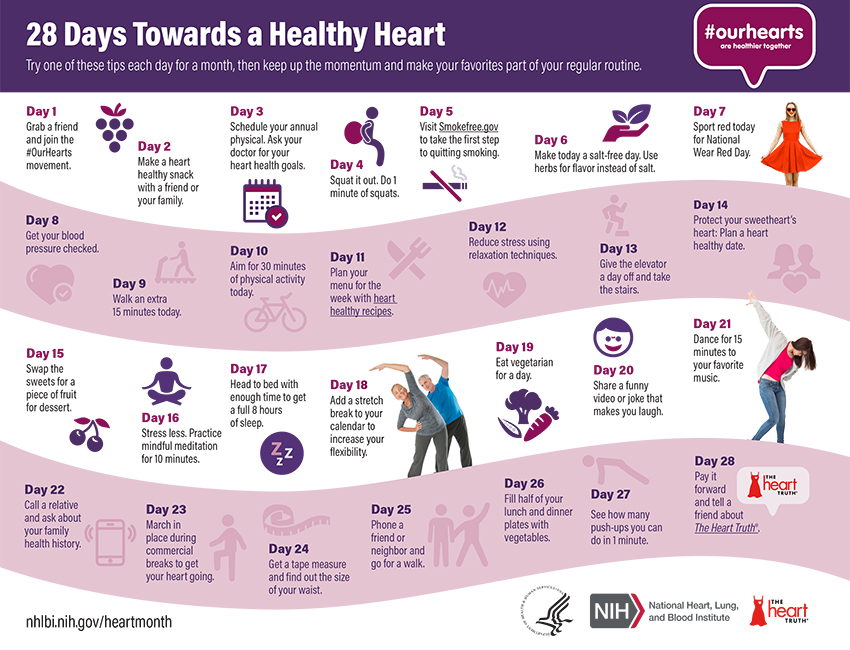
What Can You Do To Improve Your Heart Health?
- Know your blood pressure. Having uncontrolled blood pressure can lead to heart disease and other serious problems such as stroke and kidney failure.
- If you have high blood pressure, check it regularly between your doctor appointments and keep a record of your readings. Your blood pressure changes throughout the day so try to check it at different times throughout the day.
- Get at least 30 minutes of physical activity most days, or 150 minutes of activity each week. Remember activities like gardening and some housekeeping can count a physical activity.
- Check your cholesterol and maintain healthy levels.
- Talk to your doctor about your weight and what healthy weights look like for you.
- Incorporate healthy food choices in your meals and snacks.
- Limit how much alcohol you drink to one drink a day.
Manage stress levels by finding healthy ways to cope with stress.
For most women, high pressure can be controlled with lifestyle changes such as exercise, healthy eating and stress management. Here are some resources to get you started on a heart plan to lower and maintain a healthy blood pressure.
- Heart Disease and Stroke https://www.womenshealth.gov/heart-disease-and-stroke
- Healthy Living by Age https://www.womenshealth.gov/healthy-living-age
- Heart Disease Risk Factors https://www.womenshealth.gov/heart-disease-and-stroke/heart-disease/heart-disease-risk-factors
- Controlling Blood Pressure https://www.nhlbi.nih.gov/health-topics/high-blood-pressure
- Getting Active https://www.womenshealth.gov/getting-active
- Healthy Eating https://www.womenshealth.gov/healthy-eating
- Million Hearts https://millionhearts.hhs.gov/
- National Heart, Lung, and Blood Institute (NHLBI) https://www.nhlbi.nih.gov/health-topics/high-blood-pressure
No Comments